I first stepped foot in East London as a child, as my father was a regular rower at Poplar and Blackwall District Rowing Club, on the Isle of Dogs.
I was brought up in Bromley, Kent, which is not a river riparian borough, so I used to cycle or get a bus to Greenwich, then access the Isle of Dogs via the Foot Tunnel, where I learnt to row at the very same club.
During high tide periods, the rowing club regularly either used the Millwall Docks or the Royal Docks to train on the protected inland closed waters and it was from this that I witnessed the decline of the docks and then later, their evolution to be repurposed.
In fact, I can remember training for the Junior National Championships and boating from what is now the London City Airport runway, where my ‘changing rooms’ was the boot of our car in the derelict docklands.
During the winter we spent most of our time out on the Thames, boating between Tower Bridge and the Thames Barrier. To see an actual rowing club evolve is very pleasing, what’s even greater today is seeing London Youth Rowing residing at the Royal Docks, along with venues like the Docklands Sailing and Watersports Centre in the Millwall Docks and various facilities on our inland waterways, like the River Lea. My first ever race at Junior 12 was at the Lea Rowing Club Springhill Rowing Centre.
My father was the Dock Master in the West India Docks during the early stages of the development of Canary Wharf, at the point of which the wharves had only just been flattened and preparation to start digging for their foundations had commenced.
I myself was a third-generation watermen in my family, and one of my first jobs on the river was based at West India Dock Pier, near to Canary Wharf, which is where I saw the London Docklands development start to come to fruition.
I joined during its decline, but as the purpose of Docklands began to evolve, I equally saw the opportunity to deliver a successful river bus service in 1999, despite there being a double-digit number of failures prior to that.
The trade that I am in on the river, the transportation of passengers, has only been made possible as a result of the development of South and East London, alongside that of the South Bank and more recently the developments out to the west at Battersea Power Station, has allowed my business today, Uber Boat by Thames Clippers, to be such a success.
Opportunities and facilities are beginning to evolve and need to continue to do so in order to allow society – and in particularly young people – the opportunity to get involved in very many of our various water sport activities. This must continue to evolve as more development takes place, since our waterways offer a unique opportunity for people moving into these areas.
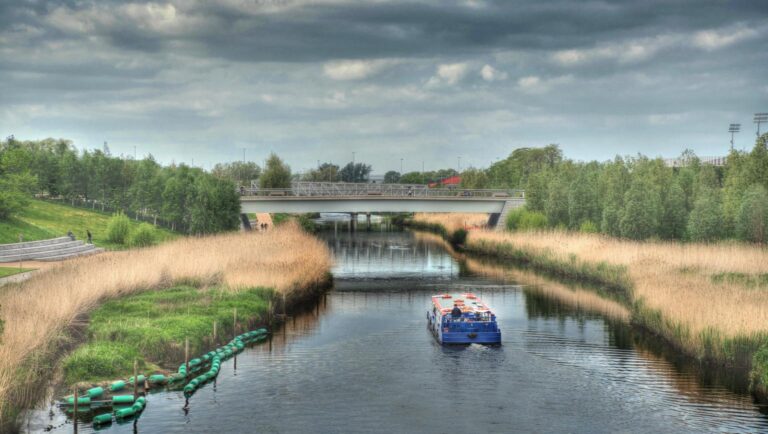
Over the last 20 years the river has started to see a renaissance, with more and more investment coming online in both passenger and freight. At Uber Boat by Thames Clippers we have seen the introduction of hybrid and electric vessels and a great opportunity for the Thames, the artery of transportation in London.
We’re delighted to be partnering with The Wick over the coming months to celebrate more fantastic stories about East London’s historic waterways, and we’ll be closely following the latest developments in bringing the historic Eton Mission Rowing Club back to the water after many years in 2026.