Guest Editor: Kwame Safo, The British Council
Taking things global from East London roots – my story
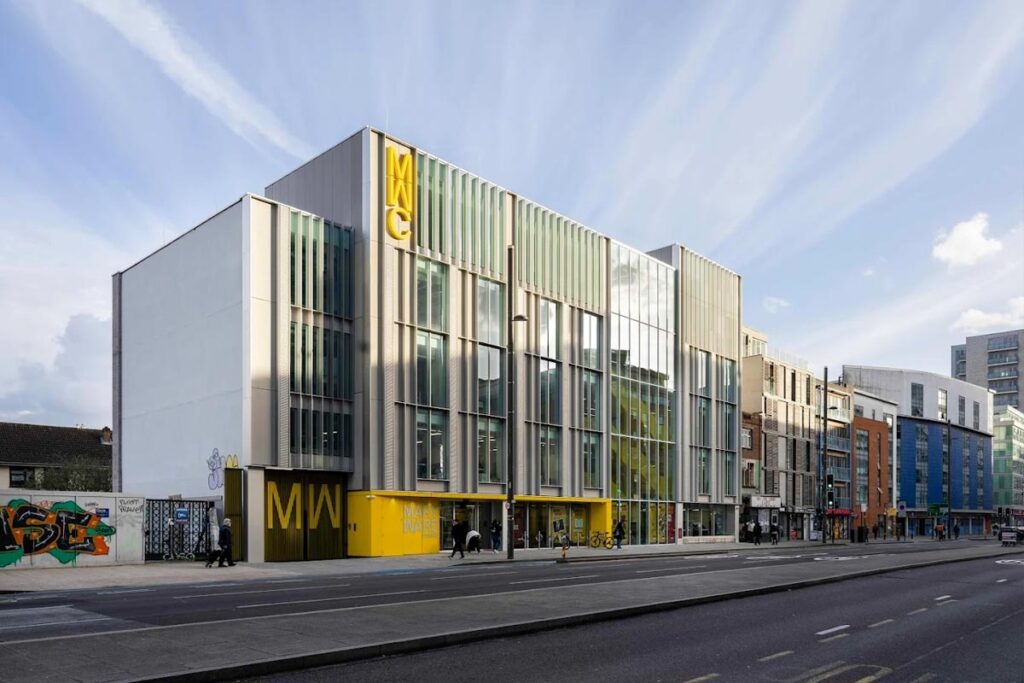
The days are dark and cold, but I learned East London has an antidote to hunkering down for the winter – the Mary Ward Adult Education centre. A quick, 8-min walk from Stratford station and I’m surrounded by the hues of an uplifting summer yellow and a busy bustling reception.
I’ve arrived for a pottery class, all-day on my weekend, and persuaded my friend Kate, to join as a treat for our significant birthdays which have passed in the past year.
We are welcomed in, and issued passes for the day, letting us know we’ll be escorted downstairs to their pottery studio as soon as the teacher is ready. I’ve never attempted pottery before; however, Kate has, and her poor wheel experience has made her reluctant to try again – but I book for us both and drag her with me all the same.
Collected as a group, by Diana, all of us, strangers, are warmly welcomed into a studio flooded with natural light, and an outdoor space adjacent to where we make our first pots.
Diana is happy for everyone to do what they want to do, if they want to use the wheel or the clay independently, or if they want to follow what she instructs.
Kate and I are happy to follow along and we chat with the group who have travelled in from the likes of Finsbury Park, Kilburn, Crouch End and then regulars who are from nearby.
Not surprising perhaps as Mary Ward used to be in Queens Square in the borough of Camden. Its new site here on Stratford High Street, now in the borough of Newham, has been here since 2023, where local students now account for 40%.
The warm approachable CEO Therese Reinheimer-Jones believes it’s exactly where they should be “we’re in the right place I think,” she tells me. “Mary Ward would have wanted us to have moved here to East London.”
The original Mary Ward (1851-1920) was an staunch advocate for education and support for the working class, where for a small fee people found not only “buzzing community hubs, but also a place to belong”.
The new site was once an office building, and repurposed 65% of the structure – significantly reducing carbon emissions, it is truly sustainability-in-action.
Therese explains, with beaming energy as she gave me a tour, how she and her team sourced their bright modern furniture; tables, chairs and arm chairs in novel ways, “I was searching online and we saw that a nearby big corporate business were throwing them out. They get new ones each year – so we snapped these up for our students.”
Over 5,500 students pass through Mary Ward’s doors every year made up of refugees, city workers, elderly, those going through major life changes, those bereaved, those starting out, and those who have found themselves at a crossroads, and anyone who wants to try something new.
The atmosphere here is of pure warmth and welcome to everyone, no matter what you want to study, or for how long, and they are one of the few colleges left offering concession prices for those on benefits and/or low wages.
As the government funding for education is cut, they operate only with a lean budget, having to apply for multiple grants and open for donations, all the money they do make is funnelled right back into the education and facilities.
Their courses are wide-ranging and affordable too. In a cost-of-living crisis, that can be the difference between doing something fun for yourself and isolation – something the college are aware of and concerned about.
Options include stained glass painting, printmaking, dyed textiles and multiple pottery classes, also – uniquely – knickers and bra making, something I’ve never seen offered anywhere else. Hands-on skills in an automated world – there’s something very grounding going on here. Tech classes include Adobe tools like Photoshop and Illustrator, design and textiles, and humanities, with the traditional like history. Additionally there’s psychology, anthropology, and even sociology, with ‘The Crises of Moral Authority and the Withering of Personal Responsibility’.
Each class comes complete with teachers to uplift and propel you; many students move forward to higher education after being at Mary Ward or work with their new skills.
The reception staff are open for a chat, even if you’re just passing by, or to help you find the right class and also if you need more support, the café staff seem to be able to read minds, and know just what you want, making you laugh and connect in the best way.
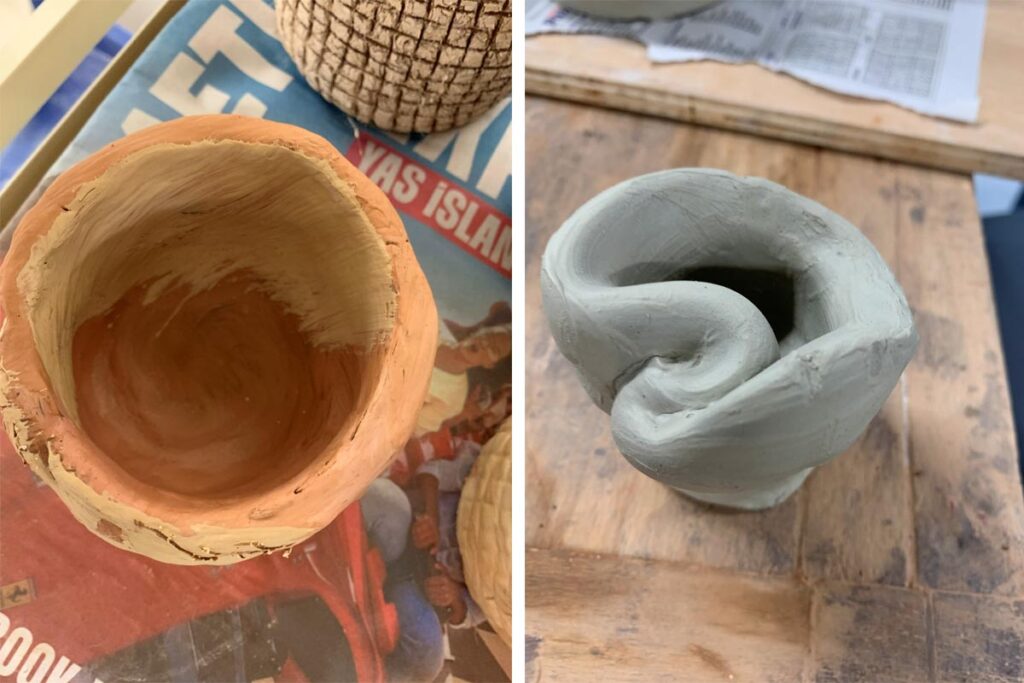
Our pottery wheel experience happened after lunch, and after much laughing and getting our hands wet and mucky, I came out with a very twisted shape, whereas Kate emerged no longer reluctant, but having made two impressive cups off the wheel.
All of us strangers in the morning, friends by the afternoon complementing our successes and our strange shapes. Fantastic result! For me though, I’ll just keep on having a try, since Diana was very encouraging, regardless.
Mary Ward Centre can be found at at 275-285 High St, E15 2TF
Find out more and book yourself on an upcoming course at: marywardcentre.ac.uk

Taking things global from East London roots – my story

More than just another pizza and pasta parlour, we found ourselves falling for Figo
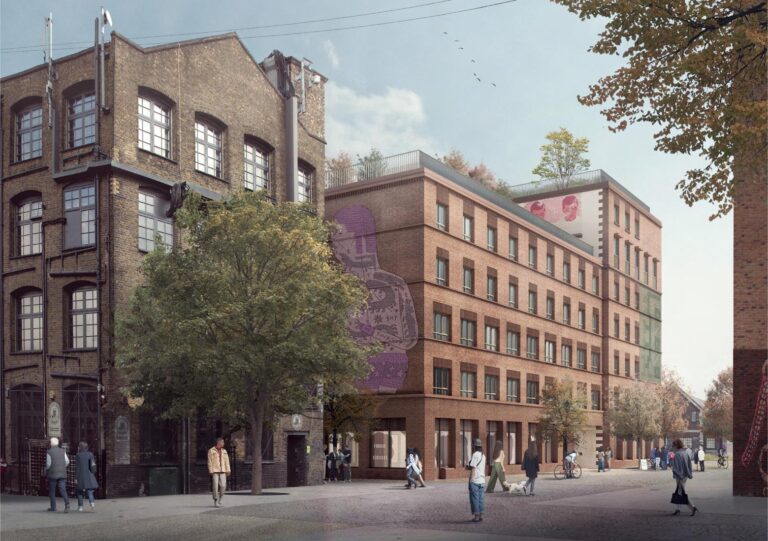
How developers proposing Hackney Wick’s first hotel, and a bold new co-living scheme, both reached out to the community, ensuring better results for everyone
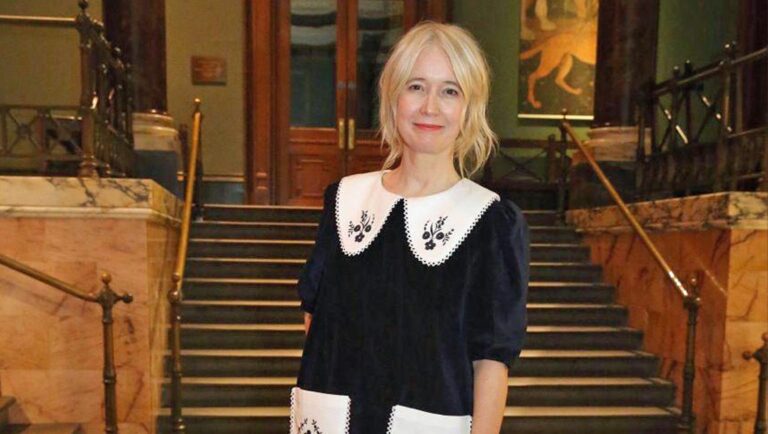
London’s Deputy Mayor for Culture and the Creative Industries on Hackney Wick’s influence on Creative Enterprise Zones, the Olympic legacy and the arrival of East Bank

Pianist Ben Waters and his talented band play as we sink the Tingalings

an ambitious ‘meanwhile’ project that mixes wellness and community activities in a striking urban setting
A 160-page hardback celebration of resilience, featuring hundreds of photos, stories and memories: 15 years of culture, community and change