Education
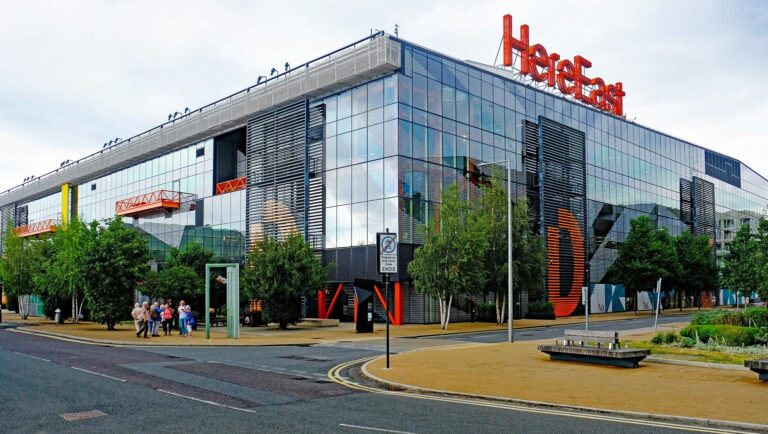
Discover the Here East Scholarship Programme
Current and former beneficiaries of this educational support initiative for East Londoners describe just what it means to them and their families

Full disclosure: I’m no expert and am still learning the sub-genres, but I’ve been enjoying the street art scene in East London for more than a decade. I love the debate it provokes, enabling conversations with visitors and locals alike that wouldn’t happen without visual pavement provocations. It doesn’t tell you what to think, but invites you to deconstruct what you’re seeing or being told – and then make your own mind up. It’s a form of critical thinking.
As Hackney Wick changes, so does the street art and graffiti and the way it interprets the world around us. Mine is one person’s reductive and partial view of what can be seen in the Wick, but it might give you a little flavour of the variety of styles and approaches found here. There is no single voice or one definitive opinion, as you might expect from a broad community of people expressing their ideas on the walls of this unique, fast-changing area.
I will always associate Sweet Toof with Hackney Wick; the distinctive pink gums and white teeth highlight rooftops and brighten-up underpasses. An unusual character with a sense of humour, I’ve bumped into him under the A12 at midnight and even in disguise, working the bar at his own show in Dalston’s BSMT gallery! Moving here in 1999 he found a playground, a “no-go” area where rent was cheap; wasteland abounded around empty warehouses and burnt-out cars.
He recalls “…late night painting sessions and breakfast in the Island Cafe. It was a dream and a blur most of the time. During the construction of the Olympics the trust-fund kids and hipsters moved in, the rent went up and the property developers had a party. The walls we painted got covered with Coca Cola murals and some were knocked down. The pay-as-you-go type murals commissioned by brands came, complete with anti-graffiti coatings. Before you knew it the place was urban and edgy and everybody wanted to live in the Wick. Feeling bittersweet I decided to move in 2016 but I will come back when I can – and walk where I once ran.”
An upsurge in activity in the last couple of years on construction site hoardings feels a little like a last hurrah before people get fussier about surfaces. Street art is often transient, but veteran Cityzen Kane managed to have one of his distinctive Eastern-influenced sculptures glued to the wall of the Lord Napier for years. Originally gold, it changed colour regularly as it found itself overpainted, part of countless bigger pieces on the former boozer, famous for street art and squat parties.
Aida Wilde (Print is Power) is another Hackney Wick mainstay, still here and still critiquing gentrification. She curated an event in 2016 featuring names like Dscreet, Mighty Mo, Static and many more. This is when the Napier acquired its distinctive headline from Edwin: “Shithouse to Penthouse”. The first section painted, it was strategically placed high up to last longer. Ironically it found itself on a property brochure without – to Wilde’s chagrin – an artist credit.
“The Napier project was activism as well as raising awareness of the wealth and breadth of street artists who have left their mark in Hackney Wick’s urban landscape over a decade,” she says. “The actual building became a symbol/beacon for protest and defiance, rather than marketing material for estate agents or developers. I love the fact that the punters who’ve paid half a million for their ‘warehouse style living’ across from the Napier in the Bagel Factory have to wake up and see Shithouse To Penthouse every day from their windows. This is our legacy.”
The mix of imagery is intense right now, from the posters of Subdude and Benjamin Irritant to the wildstyle graff of Korpz and the all-seeing eyes of Noriaki and The Real Dill. Consciousness-raising Elephant Man is bringing sculpture here too, asking us to consider elephants as persons. But it’s the controversial graffiti that has always interested me most. The running battles between the blue fence painters of the Olympic site and local scribes were fascinating in the years before the games. Perhaps the most well-known example of cheeky graffiti was Mobstr’s line of tally strikes on the wall opposite Duckett’s Canal, marked: “No. of days graffiti remains”. Slogans on Dace Road criticising the stadium also got painted over, only to return again, “Ugly stadium” cheekily responding to the Olympic buff with “Its [sic] still ugly”.

You’ll never get one single view and there are strong identities and opinions around street art, muralism and graffiti. I like this pluralism: everyone adds something different. Edwin’s been around for a while and the distinctive blocky text always comes with an edge, like“Middle class by the glass” or “This ship is sinking”.
As the area changes, so does the art. Broken Fingaz works are long gone but now ‘big names’ with huge swathes of bold bright colours like Thierry Noir can be found on warehouse-sized works. Noir famously painted the Berlin Wall in the 80s and I made my own Berlin Wall-themed street sign intervention in the pre-Olympic period; the highly securitised area along the Hackney Cut had taken on a border zone feeling and British Transport Police ran dawn raids.
On a similar cherry-picker scale to Noir, in Main Yard, Dale Grimshaw’s West Papuan face references oppression (some say genocide) by the Indonesian government. It sits between Zabou and a 2015 collaboration between Martin Ron and Jiant. But you can still find an “RIP Robbo” reference or two while and the tiny sticker scene is rich in text-heavy messaging. 2012 squaddies have gone, but the composite Burning Candy crew piece they patrolled under still burns opposite the White Building. Bridge graffiti reminds us the only constant in life is change.

The best stories can’t be told in a public arena. Come after dark and chat to graff crews like ODC under railway bridges. As they studiously upsize from prototype drawings on crumpled sheets of A4 or just freestyle it, that’s when you’ll get the real subculture gold. In 2012 I met the ballerina-drawing Neoh but he was very coy. I found out later that he had to assume I could be an undercover. I suppose I was, in a way.
As the area becomes less industrial and more residential, it’ll be interesting to see whether the scene as we know it survives. When Swedish street artist EKTA was brought in to cover the side of the building that housed Mother Studios, this outside choice was controversial. But at the time of writing there is still much to see. Run has just popped down from nearby Clapton to finish a mural outside Grow Studios and under the A12 lurk all kinds of wonder.
Apologies to all the missing names who bring something extra to the mix. As the first Covid-related pieces appear and Fish Island graff thrives, the need for the Arts to critique society will never go away. There’s been no shortage of material to satirise in 2020. I hope there will always be something interesting to see on Hackney Wick’s walls: the light and the shadow. Art is a means of philosophical enquiry to interrogate a complex and highly-mediated environment but sometimes it’s just nice to see some colour in your concrete jungle. Grey walls, as Cityzen Kane has said elsewhere, make for a grey world.
Find more of Simon Cole’s writing and info on joining his famous tours at hackneytours.com
Current and former beneficiaries of this educational support initiative for East Londoners describe just what it means to them and their families

What’s it like diving into a course to learn a brand new skill at Stratford’s adult learning hub?
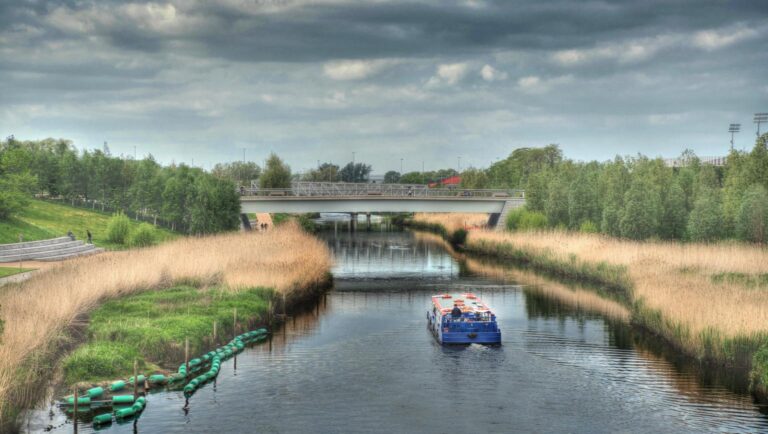
Mischaracterised as a murky footnote on the city fringes, the river has in fact inspired culture, protest and innovation for hundreds of years
Why East London’s rivers are so special, and continue to be so over decades of change

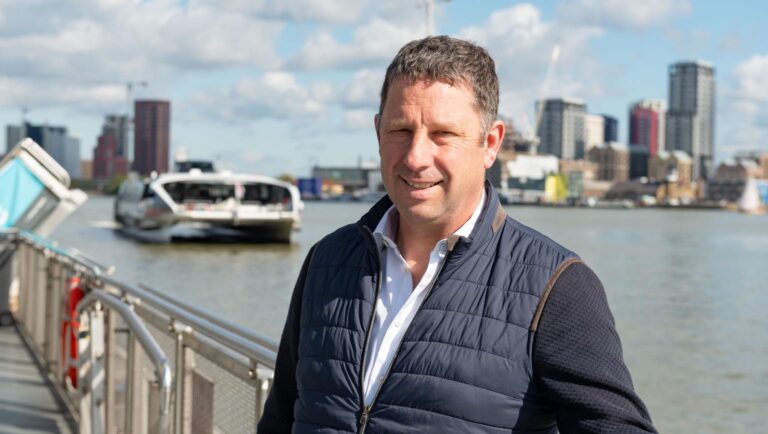
The CEO of London Legacy Development Corporation is The Wick’s latest guest editor